While green spoke of the earth, one color reached for the heavens and became one of the most dramatic stories in fashion history: blue. From a humble, common hue to the most precious and sacred color on the palette, the rise of blue is a tale of trade, technology, and divine inspiration. Let's dive into the deep and captivating world of medieval blue.
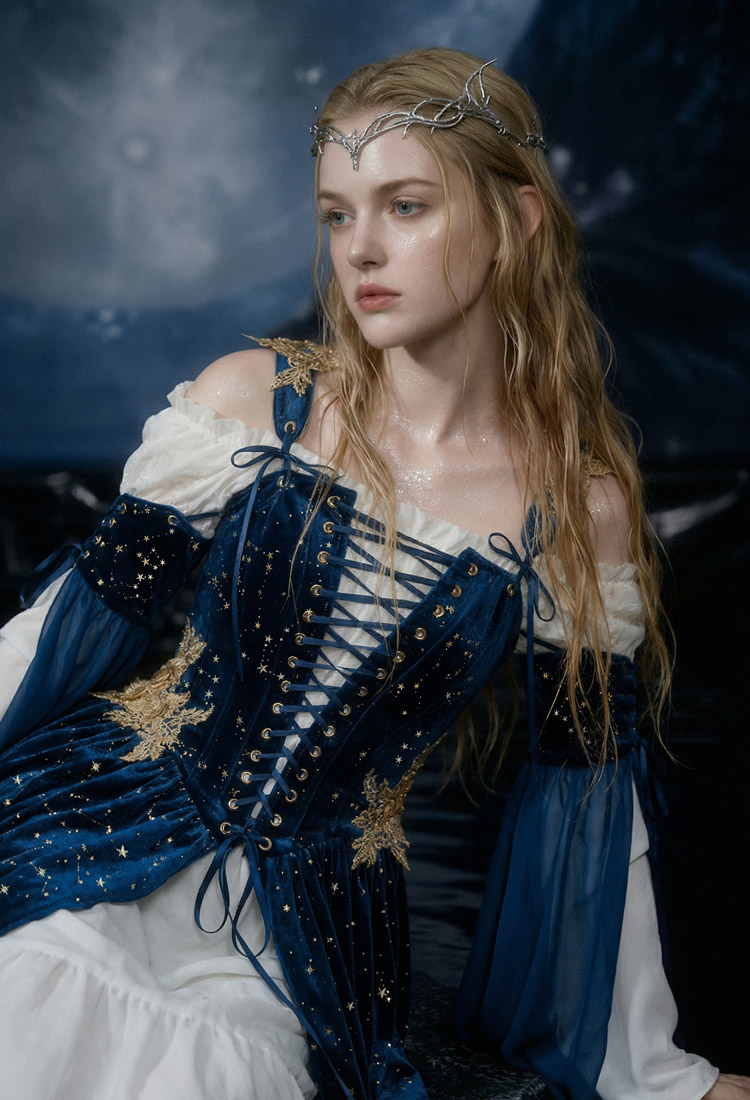
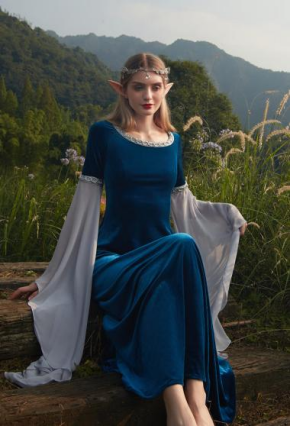
1. Elven Royal Ocean Blue Gown
This velvet gown, dominated by a deep ocean blue hue, features silver-threaded embroidery on the collar and cuffs, replicating the elven reverence for the "sky and stars." Within Celtic lore, the blue attire of elves symbolizes their spiritual connection to nature, while the velvet material aligns with the medieval aristocracy's pursuit of luxurious fabrics—exemplified by the once highly sought-after Flemish velvet in European courts.
Recommended Occasions: Suited for medieval fantasy-themed galas or elven cultural exhibitions, its fluid drape and metallic adornments masterfully evoke the mystical aura of the "Forest Royalty."
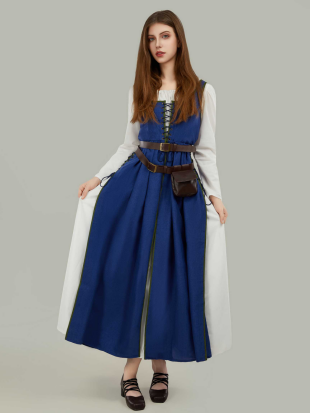
2. Commoners Indigo Blue Dress
This indigo blue and white dress features a laced bodice and a practical linen lining, embodying the "utility-first" principle of medieval commoners' attire. The fabric was typically dyed with woad, a plant-based dye whose hue, though less intense than the precious ultramarine reserved for the nobility, carries the rustic authenticity of rural craftsmanship — each step, from leaf fermentation to dyeing, imbued with the labor of commoners' hands.
Recommended Occasions: Ideal for medieval folk festivals or historical reenactments of daily labor. Pair it with a leather belt pouch to fully immerse in the authentic atmosphere of everyday life in medieval Europe.
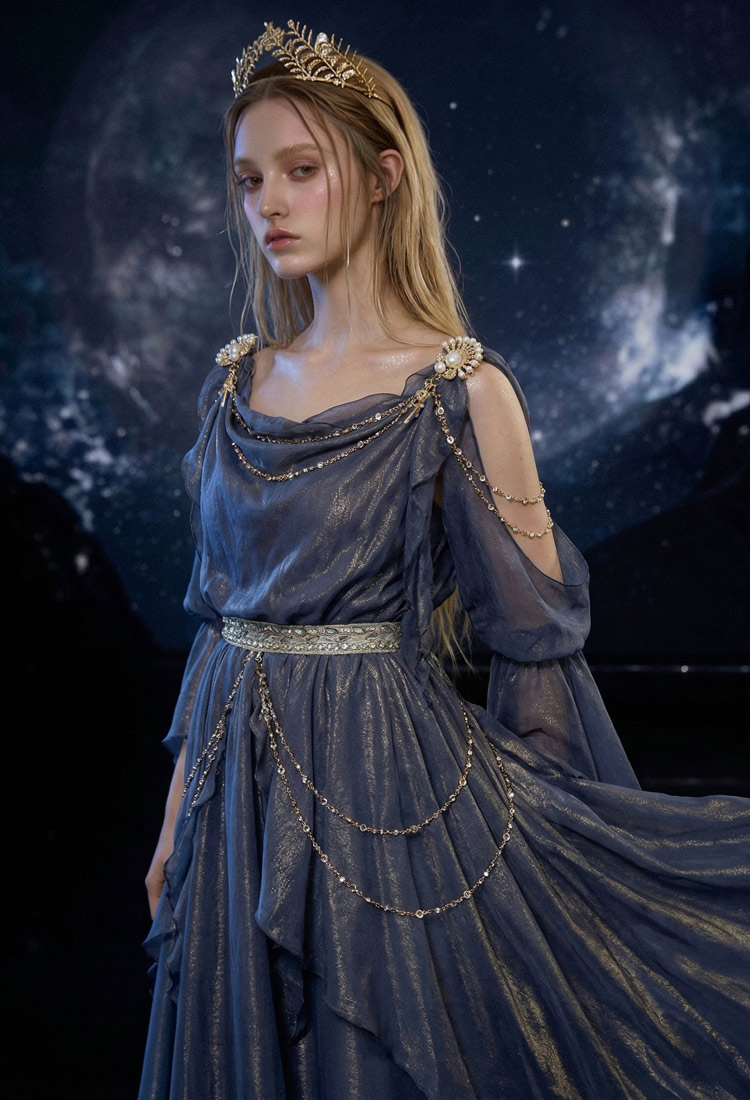
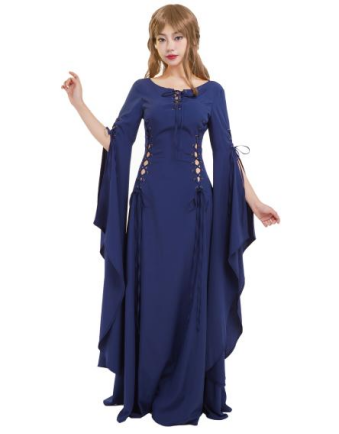
3. Noble Dark Navy Blue Robe
The deep navy blue, full-length gown features an openwork lace-up design, drawing inspiration from the elongated silhouettes of 13th-century French aristocratic "Gothic tailoring." The rich navy fabric signifies the wearer's capacity to afford luxurious ultramarine dye.
Recommended occasions: Ideal for recreating royal banquets or knighting ceremonies, where its solemn elegance and meticulous design accurately convey the power and refined taste of the medieval nobility.
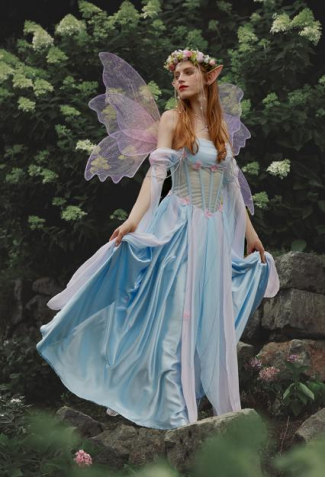
4. Fairy Light Blue Gown
This ethereal gown in a soft blue gradient incorporates medieval conceptions of "natural spirits." In Germanic mythology, blue was considered the "magical hue" of forest fairies, while the butterfly embellishments and sheer fabric echo the illustrative motifs of "fairies dwelling in morning dew" found in medieval manuscripts. This dreamlike quality also aligns with the romantic exploration of "supernatural aesthetics" on the eve of the Renaissance.
Recommended occasions: Perfect for medieval fairy-tale themed events or spring celebrations, where the combination of delicate tulle and wing-like elements instantly transports one into an enchanted forest where fairies emerge.
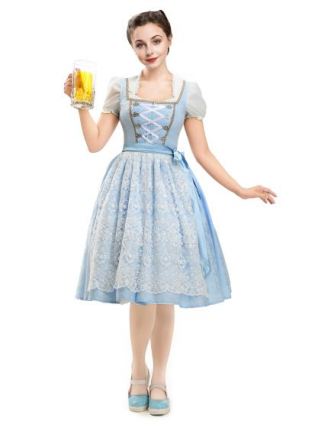
5. Bavarian Light Blue Dirndl
This pale blue lace dress is a medieval-inspired sartorial reinterpretation of the Bavarian traditional "Dirndl." While not a historically accurate garment from the Middle Ages, it reflects the enduring cultural resonance of the color blue within the region. During the medieval period, Bavaria's indigo trade relied heavily on Danube River shipping, which fostered a local affinity for blue that subsequently became imbued with folk culture—a preference still evident today, as evidenced by the frequent presence of blue in traditional attire at the Munich Oktoberfest.
Recommended occasions: Ideal for German-themed medieval events or folk culture exhibitions, best accessorized with a classic beer stein.
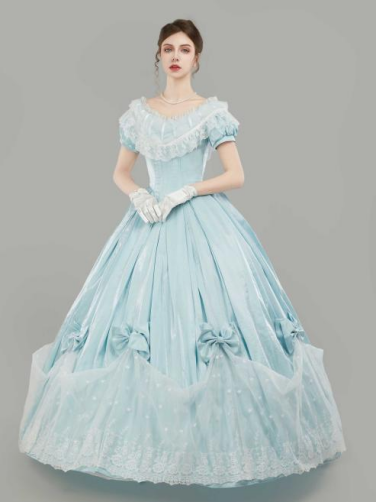
6. Victorian Azure Color Ball Gown
This sky-blue ball gown, with its grand petticoat and lace details, pays sartorial homage to the medieval court's pursuit of ‘exaggerated forms’ epitomized by the 16th-century Spanish "Verdugado" farthingale. Its light blue hue traces back to the medieval Church's veneration of "Marian Blue." In religious paintings, the Virgin Mary’s blue mantle symbolized purity—a symbolic meaning that endured into the Victorian era, where it came to represent the dual superiority of nobility in both morality and aesthetics.
Recommended occasions: Ideal for vintage court balls or medieval religious-themed exhibitions. Its silhouette and lace effectively connect the aesthetic lineage of blue from the Middle Ages to the Victorian era.
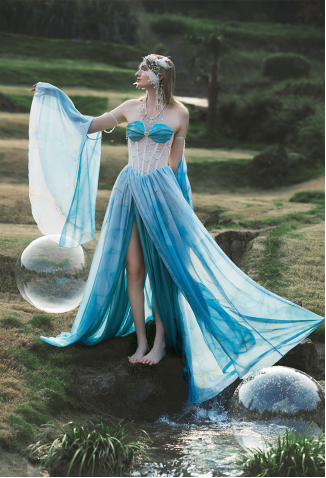
7. Mermaid Azure Color Costume
This mermaid gown in a gradient of aquamarine echoes the medieval veneration of the "divine sea." In Byzantine maritime culture, blue was considered the "protective hue" of sea deities. The shell and pearl adornments recreate the scarcity associated with "oceanic treasures" in Mediterranean trade—pearls were once a core commodity for Venetian merchants.
Recommended occasions: Suitable for medieval-themed oceanic celebrations or epic nautical exhibitions.
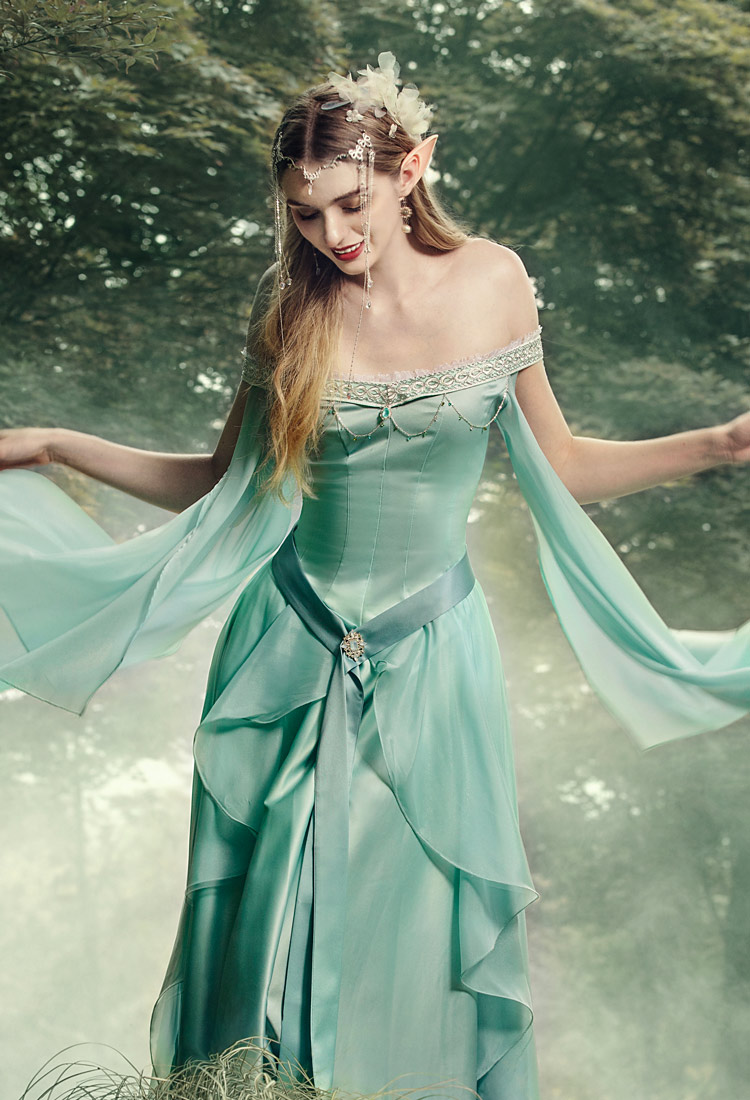
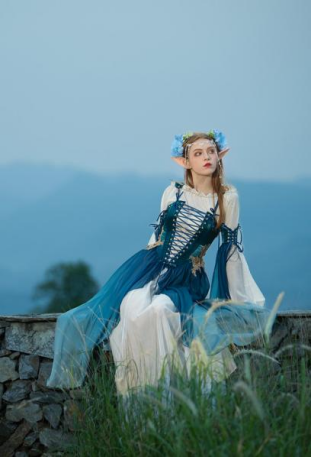
8. Fairy Blue Green Costume
The corset defines this ensemble, shaping the waist with elegant lacing and framing the torso with structured refinement—a hallmark of medieval aristocratic style. Embellished with intricate lace and metallic details, it evokes an aura of timeless grace.
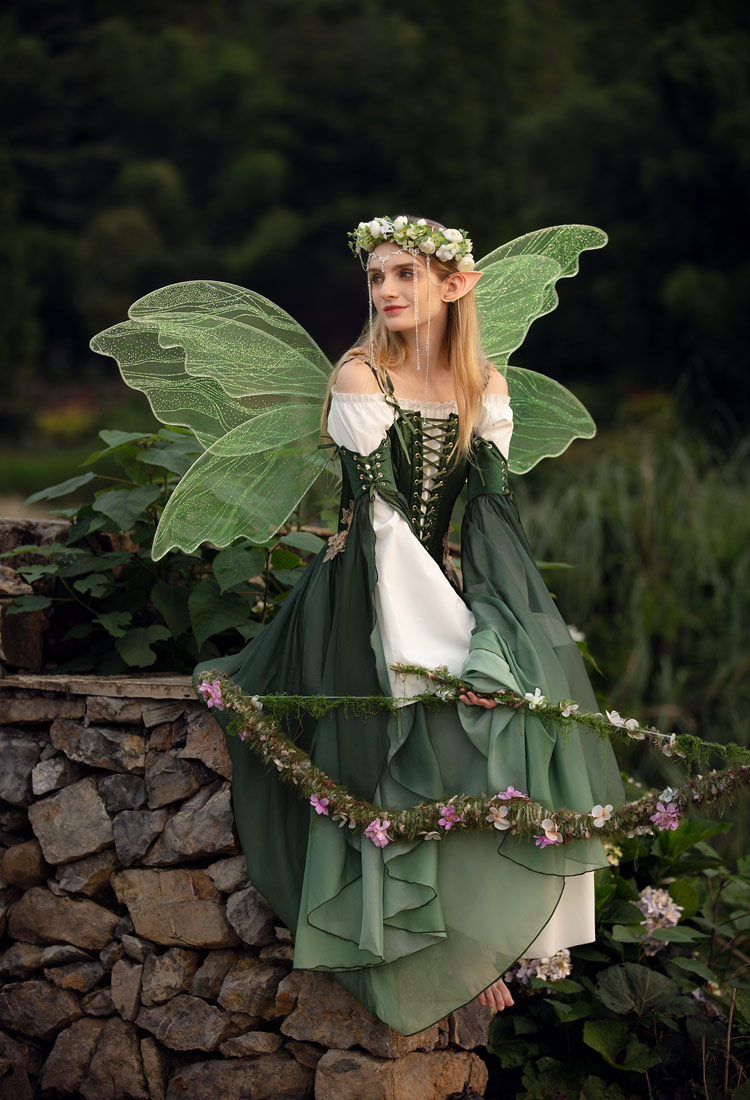
Inside, a soft white sheer gown, much like the historic chemise, lies close to the form. Outside, a flowing aqua overdress reinterprets the loose silhouette of the Cotehardie in modern chiffon, capturing a dreamlike, almost mystical lightness. When the breeze stirs, the skirt sways like the fleeting shadow of a woodland spirit moving through the leaves, uniting history’s solemnity with the delicate magic of fairy tales.
Recommended occasions: Perfect for medieval rural celebrations or ceremonies honoring nature. The ensemble carries a refreshing yet deeply rooted charm, evoking the "living energy of blue" as revered in traditional farming culture.
From the simple blue clothes of commoners, dyed with woad, to the splendid ultramarine gowns of the elite, medieval blue was always a rich tapestry woven with threads of "identity, belief, and commerce." Every blue gown echoes a chapter of history sealed in thread—sometimes telling of a commoner's toil, sometimes proclaiming a noble's power, and at other times, whispering the enchanted legacy of mythical sprites and fays. When we don these blue attires today, we begin a timeless conversation with the tastes, traditions, and very essence of a world a thousand years past.
Where to Find Them
All looks featured are available through Daizbella.com, your destination for high-quality Renaissance fair costumes, fantasy-inspired gowns, and medieval cosplay outfits. Each piece is designed with attention to historical aesthetics, flattering cuts, and magical details.
Stay Tuned
Follow us every week for new outfit pairings, character-style guides, and Faire fashion inspiration. Whether you're attending your first Renaissance Festival or your fiftieth, Daizbella ensures you'll dress like you were born in another era.